
Working With a Restoration Contractor on Your Insurance Claim: A Calgary Guide
Property damage can create an overwhelming number of decisions in a very short time. You may be dealing with water spreading through a basement, smoke affecting several rooms, a sewage backup, or storm damage that has left part of the building exposed.
At the same time, you are being asked to contact the insurer, document the loss, protect your belongings, and decide who will complete the work. Most homeowners do not handle insurance restoration claims regularly, so there is no reason to expect that you will already understand every step.
A qualified restoration contractor should make the situation easier by documenting the damage, explaining the required work, communicating with the adjuster, and managing the physical recovery of the property. The insurance company still determines what your policy covers, while the contractor provides the technical information and completes the restoration work.
Why Your Restoration Contractor Should Be Involved Early
The first few hours after property damage can affect both the condition of the building and the information available for the insurance claim.
Water can move under flooring, behind baseboards, through drywall, and into insulation. Smoke residue may travel beyond the room where a fire started, while sewage contamination can affect porous materials that look relatively clean from the surface.
After a Calgary freeze, hailstorm, roof leak, or spring basement loss, the visible damage may show only part of what has happened inside the building. Bringing in a restoration contractor early helps limit further damage and allows the original conditions to be recorded before cleanup changes the site.
During the first visit, the team should assess immediate safety concerns, identify affected areas, take photographs, complete moisture readings where appropriate, protect contents, and begin emergency stabilization.
Depending on the loss, that work may involve water extraction, controlled drying, board-up, temporary roof protection, containment, air filtration, or removal of materials that cannot safely remain in place. Documentation should happen alongside the work because once water has been removed or damaged finishes have been opened, the property no longer looks the way it did when the loss occurred.
The Contractor, Adjuster, and Homeowner Have Different Roles
Insurance claims are easier to manage when everyone understands where their responsibility begins and ends.
The contractor can meet with the adjuster, explain moisture or contamination concerns, submit estimates, and provide records supporting the work. The contractor cannot approve the claim, interpret the policy on the insurer’s behalf, guarantee that every item will be covered, or remove the deductible.
What Your Contractor Should Document
The adjuster may not see the property until emergency work is already underway. In some situations, the contractor cannot safely wait for a full insurance inspection before extracting water, removing contaminated materials, or securing an exposed building.
Initial damage records. Photographs, video, measurements, and room-by-room notes establish what the property looked like before emergency work changed the site.
Moisture and drying records. Moisture readings, maps, equipment logs, and monitoring notes help show where water travelled and how the building responded during mitigation.
Materials and contents. The contractor should record damaged finishes, structural materials, belongings that were moved or affected, and areas opened during demolition.
Testing and completion records. When mould, asbestos, sewage, or another contamination issue is involved, testing, remediation, or clearance reports may become part of the file. Progress photographs, invoices, and completion documents should then connect the stages into one clear account of the project.
How the Contractor’s Estimate Works With the Insurance Scope
After the initial assessment, the contractor prepares a scope of work and estimate describing what needs to be stabilized, cleaned, removed, repaired, or rebuilt.
Depending on the loss, the scope may include emergency services, drying, demolition, contents handling, odour treatment, specialized remediation, and reconstruction.
Insurance restoration contractors commonly use Xactimate, estimating software used throughout the property insurance industry. It organizes measurements, materials, labour, equipment, and repair tasks into line items that adjusters are familiar with reviewing.
Why the Estimates May Differ
Using the same estimating format does not mean the insurer and contractor will always arrive at the same number.
The insurer’s initial scope may focus on visible damage, while the contractor may identify additional work involving hidden moisture, access requirements, containment, material removal, or reconstruction.
Measurements and material assumptions may also differ. A room that appears lightly affected from the doorway may require more extensive work once moisture readings are taken or finishes are opened.
How Those Differences Are Resolved
When the estimates do not match, the contractor should identify the differences and support them with photographs, measurements, readings, or other records.
The contractor may discuss the scope directly with the adjuster and provide additional documentation where needed. The homeowner should not be left trying to explain technical restoration requirements to the insurer without help.
What Happens When Hidden Damage Changes the Scope?
An initial estimate is based on the conditions that can reasonably be inspected at that stage. However, property damage often reaches areas that remain concealed until finishes are opened or removed.
Wet insulation may be found behind drywall, flooring removal may reveal damaged subflooring, and smoke residue may have travelled into wall or ceiling cavities. In older Calgary properties, demolition can also uncover materials that require asbestos testing before work can continue safely.
When a concealed condition is found, the contractor should photograph it, record any required measurements or readings, and update the repair scope. The additional request submitted to the insurer is commonly called a supplement.
Supplements are a normal part of many restoration projects and do not automatically mean the original inspection was incomplete. Some damage simply cannot be confirmed until affected materials are removed.
You should understand what was found, why the scope changed, whether the additional work has been approved, and whether any portion may become a personal expense.
What Communication Should You Expect?
Communication should continue throughout the project rather than happening only when a signature or payment is required.
During mitigation, you should know what work has been completed, what equipment remains in the property, and what the team is monitoring or waiting for next. If materials need to be removed, the reason should be explained.
During the insurance review, you should know what estimates or documents have been submitted and whether a response is pending. When additional damage is found, the contractor should explain how it affects the scope and timeline.
During reconstruction, communication should cover scheduling, access, material selections, delays, and any upgrades outside the insurer-approved scope. Additional charges should not appear unexpectedly on the final invoice without a clear explanation.
For property managers and commercial owners, communication may also include tenant access, phased work, daily progress, and business operations. In either setting, the contractor should provide one clear project contact so you are not calling several trades to piece together the status yourself.
Warning Signs a Contractor May Not Be Ready for Insurance Restoration
Fast response is important, but insurance restoration also requires technical documentation, estimating, project management, specialized knowledge, and construction capability.
Watch for warning signs such as:
- Demolition beginning before reasonable documentation is collected
- A vague estimate without measurements or detailed line items
- Promises that the insurer will cover everything
- Pressure to approve the rebuild before the scope is clear
- No process for supplements or written change orders
- Unclear payment terms or responsibility for non-covered costs
- Poor communication with the homeowner or adjuster
- No plan for mould, asbestos, sewage, or other specialized conditions
- Emergency cleanup with no clear path to reconstruction
- Several handoffs without one accountable project lead
A company may be able to remove standing water and set up drying equipment without being prepared to manage the rest of the claim. Before authorizing work, confirm that the contractor can document the loss, communicate with the insurer, manage specialized risks, and complete the repairs after mitigation ends.
Why One Team From Mitigation Through Rebuild Helps
A property restoration project may involve emergency response, contents handling, demolition, drying, testing, remediation, estimating, repairs, and final documentation.
When each stage is handled by a different company, important information can be lost between handoffs. The reconstruction contractor may not have the original moisture readings or photographs, separate estimates may not align, and the property owner may need to explain the same damage repeatedly.
Keeping the project with one restoration team helps connect those stages. The original documentation remains part of the same file, conditions discovered during demolition carry into the repair scope, and the adjuster has one central restoration contact.
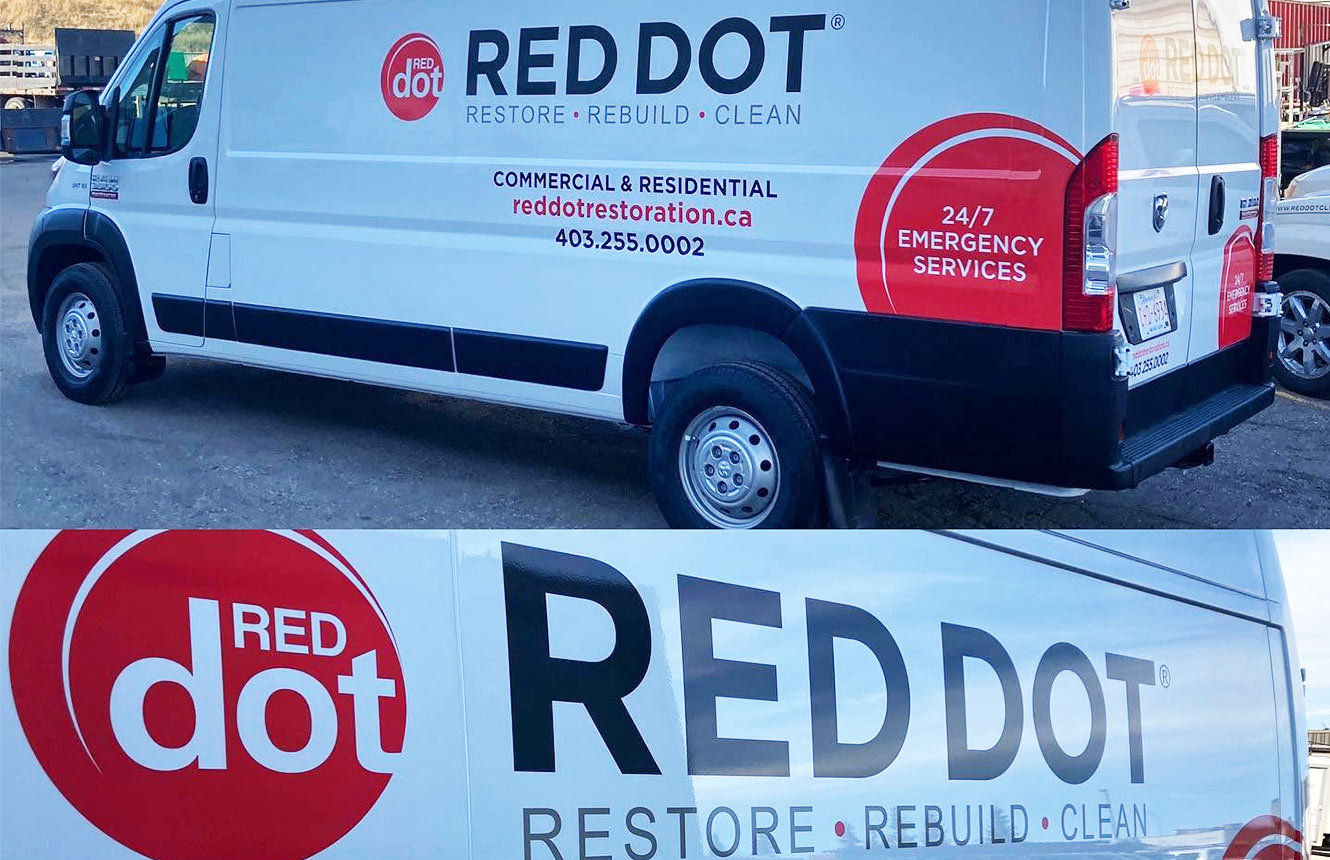
How Red Dot Restoration Supports Calgary Insurance Claims
At Red Dot Restoration, we understand that most homeowners and business owners do not deal with property claims regularly. You should not be expected to manage technical documentation, multiple contractors, and insurer communication without clear support.
We handle residential and commercial losses involving water, fire, smoke, sewage, storms, mould, asbestos, and damaged contents. From the initial site assessment, we document the damage, prepare detailed Xactimate estimates, communicate with adjusters, and manage supplements when hidden conditions affect the scope.
Once the property is stabilized, the same team can complete repairs and reconstruction. You do not need to find another contractor, transfer the claim information, and begin the process again with a new company.
Property damage already creates enough uncertainty. Red Dot Restoration provides one clear point of contact from emergency response and documentation through remediation, repairs, and the final rebuild. Reach out today.