
Black Mould vs. Regular Mould: What Calgary Homeowners Need to Know
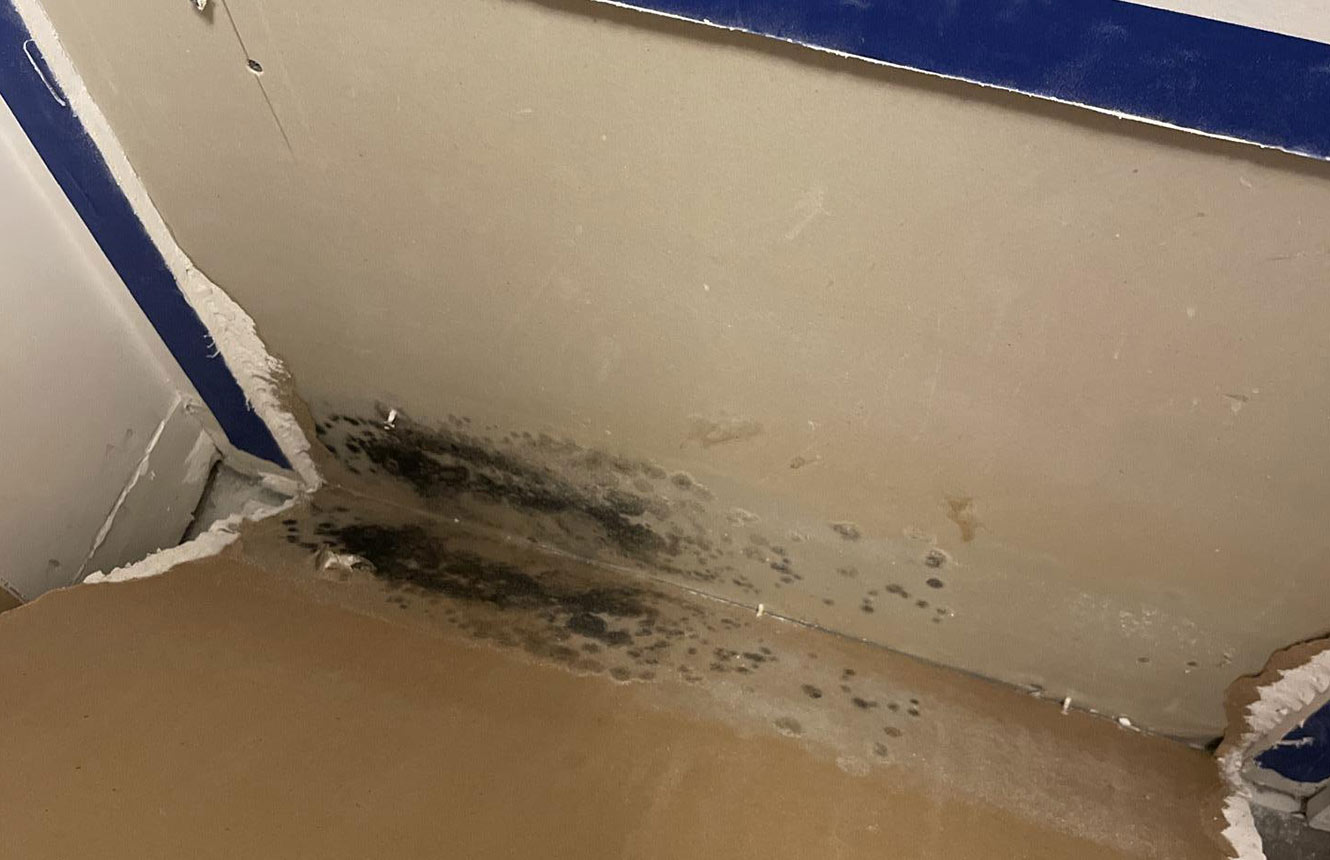
Finding a dark patch of mould in your home can be unsettling, especially when the first term that comes to mind is “black mould.” You may have moved a cabinet in the basement, opened a wall during renovations, or noticed dark growth after a leak that seemed to have already dried.
The term sounds serious, but mould cannot be judged by colour alone. Several species can appear black or dark green, while some lighter-coloured moulds can still indicate a significant moisture problem.
What matters most is why the mould is growing, how far it has spread, and which materials have been affected. Those questions are more useful than trying to identify mould from its appearance.
What Does “Black Mould” Actually Mean?
Black mould is a description, not a diagnosis. One species commonly associated with the term is Stachybotrys chartarum, a greenish-black mould that may grow on damp, cellulose-rich materials such as paper-faced drywall, fibreboard, and wood products.
Many other mould species can also appear black, dark green, grey, or brown. The same species may even look different depending on the material, moisture conditions, lighting, and stage of growth.
The phrase toxic mould is also used frequently online, but it does not describe a separate category that homeowners can identify by colour. Some moulds may produce mycotoxins under certain conditions, but a dark patch does not confirm the species, whether toxins are present, or the level of risk.
For a homeowner, the practical response remains the same: locate the moisture source, determine how far the growth extends, and assess whether the affected materials can be cleaned or need to be removed.
Black Mould vs. Other Household Mould
The colour may make one patch look more alarming than another, but it does not tell you how far the mould has spread. A small visible area behind a baseboard may extend farther once moisture readings are taken or damaged finishes are opened.
Is Black Mould More Dangerous?
Some mould species can produce mycotoxins under particular environmental conditions. That does not mean toxins are always being produced or that every person exposed will experience the same effects.
Health concerns depend on several factors, including the amount of mould, length of exposure, individual sensitivity, and existing health conditions. Damp or mouldy environments may contribute to eye, nose, or throat irritation, coughing, wheezing, allergic reactions, and worsening asthma symptoms.
Children, seniors, people with asthma or severe allergies, and people with weakened immune systems may be more sensitive. Mould should therefore not be ignored simply because it is not black.
Anyone experiencing persistent symptoms should speak with a healthcare professional. A restoration contractor can assess the building, identify moisture conditions, and remediate affected materials, but cannot determine the medical cause of an individual’s symptoms.
Why Mould Develops in Calgary Homes
Mould is primarily a moisture problem. Cleaning the visible surface is only part of the solution because the growth is likely to return if the leak, condensation, humidity, or damp construction material remains.
Calgary homes may develop mould after basement seepage during spring thaw, sump-pump failure, frozen or burst pipes, roof damage, sewage backups, or water trapped behind finished basement walls.
Attic condensation and frost can also leave roof sheathing or insulation damp. These problems may remain unnoticed until staining, odours, or visible growth appear.
Humidity can build up in bathrooms, laundry rooms, and other areas with limited ventilation. Cold exterior walls, window condensation, and furniture positioned tightly against basement walls may create small pockets where air does not circulate and moisture remains.
A room can look dry after standing water has been removed, while drywall, insulation, flooring, or framing still contains moisture. In restoration work, that hidden moisture often determines whether the situation requires a minor surface cleanup or a larger remediation project.
Can You Identify Mould by Looking at It?
Visual identification is not reliable. Different mould species can have similar colours and textures, while dust, soot, staining, deteriorated materials, and adhesive residue may also resemble mould in photographs or from a distance.
A musty odour may indicate hidden growth even when no visible patch is present. Common locations include wall cavities, the underside of flooring, areas above ceilings, and spaces behind cabinets or finished basement walls.
When visible mould and a clear moisture source are already present, identifying the exact species is often less important than correcting the moisture and removing affected materials safely. The scope of the problem usually depends more on the location, material, and extent of growth than on the mould’s name.
When Is Mould Testing Useful?
Testing should answer a specific question. It is not automatically required every time mould is visible, particularly when the growth and moisture source are already clear.
An independent assessment may be useful when a musty odour remains, but no source can be found, several areas of the property are affected, or the extent of contamination is disputed.
Testing may also be requested by an insurer, condominium board, commercial owner, or property manager. Larger remediation projects may require third-party verification before reconstruction begins.
Test results need context. A single air sample should not be viewed as a complete diagnosis of the building because results can vary with location, weather, ventilation, and the conditions at the time of sampling.
The findings should be interpreted alongside visual observations, moisture readings, the building’s history, and the locations where samples were collected.
Mould Removal vs. Mould Remediation
The terms mould removal and mould remediation are often used interchangeably, but they do not describe exactly the same level of work.
What Mould Removal Means
Mould removal generally refers to cleaning visible growth or physically removing an affected material. This might involve cleaning a small area on a suitable hard surface or taking out contaminated drywall, insulation, carpet, or flooring.
Removal addresses the visible growth or damaged material. It does not necessarily explain why the mould developed or whether moisture remains elsewhere in the assembly.
What Professional Remediation Includes
Professional remediation addresses the broader problem by identifying both the affected area and the moisture source.
Depending on the project, the work may include containment, negative air pressure, HEPA filtration, selective demolition, removal of contaminated porous materials, and detailed cleaning of the remaining structure.
Moisture conditions are then verified before the area is closed and rebuilt. On larger or more complex projects, an independent hygienist may also inspect the work or complete clearance testing.
The goal is not to eliminate every mould spore from the indoor environment, which is not realistic. The goal is to remove problematic growth, prevent contamination from spreading, correct the moisture condition, and return the affected area to a clean and stable condition.
When Can a Homeowner Handle a Small Area?
A small, fully visible patch on a hard, cleanable surface may sometimes be manageable when the moisture source has already been corrected. The decision should be based on the size, location, affected material, water source, and people living in the home.
A limited cleanup may be reasonable when:
- The area is small and has not spread into nearby materials.
- There was no sewage or contaminated water.
- The mould is not inside walls, insulation, flooring, or HVAC equipment.
- No one in the home is particularly vulnerable.
- The growth has not repeatedly returned.
Soap and water may be appropriate for some hard surfaces, but painting or caulking over mould does not solve the problem.
Homeowners should also avoid opening walls, disturbing large areas, or directing fans at visible growth without containment. These actions can spread mould-contaminated dust into other parts of the home.
When Professional Remediation Is the Safer Choice
Professional help is appropriate when mould covers a large or expanding area, keeps returning after cleaning, or has spread into porous construction materials.
An assessment is also advisable when the moisture source is unclear or when the affected area cannot be inspected without removing finishes.
Arrange professional help when:
- Mould is inside walls, ceilings, floors, insulation, or HVAC systems.
- The growth followed flooding or a sewage backup.
- Several rooms are affected.
- Mould appears during renovation or demolition.
- Insurance or property-management documentation is required.
- Sensitive occupants may be exposed.
A restoration team can use moisture readings and a controlled inspection to determine whether the visible patch is isolated or part of a larger problem.
When materials need to be removed, containment and air filtration help prevent contaminated dust from spreading throughout the property.
What to Do When You Find Dark Mould
Avoid disturbing the area more than necessary, and keep children or sensitive occupants away until the extent of the problem is understood. If there is an active leak, stop the water when it is safe to do so and arrange for the source to be repaired.
Take photographs and look for nearby signs of moisture, such as staining, condensation, soft drywall, lifting flooring, or a previous history of flooding.
Avoid painting over the growth or using a household fan to dry it because airflow can spread spores and contaminated dust. When the mould is extensive, recurring, hidden, or connected to sewage or significant water damage, an assessment should take place before materials are removed.
How Red Dot Restoration Handles Mould in Calgary Homes
At Red Dot Restoration, we understand that finding mould can leave homeowners unsure about both the condition of the home and the size of the repair. The first step is not to assume the worst, but to determine where the moisture came from and how much of the property is affected.
When mould is connected to active water damage, 24/7 emergency response is available to help limit further damage. We assess the affected area, investigate moisture conditions, establish containment, use HEPA air filtration, remove materials that cannot be remediated, and clean the remaining structure.
When testing or independent verification is appropriate, we can coordinate with third-party professionals. Once remediation is complete, the same team can also handle repairs and reconstruction.
We can provide documentation and communicate with the insurer when the mould is connected to a covered property loss. Whether the growth is black, green, white, or another colour, the priority is understanding why it is there and how far it has spread.
Contact Red Dot Restoration for a clear plan from moisture correction and mould remediation through final rebuilding.