
Commercial Water Damage in Calgary: How to Protect Your Tenants and Building
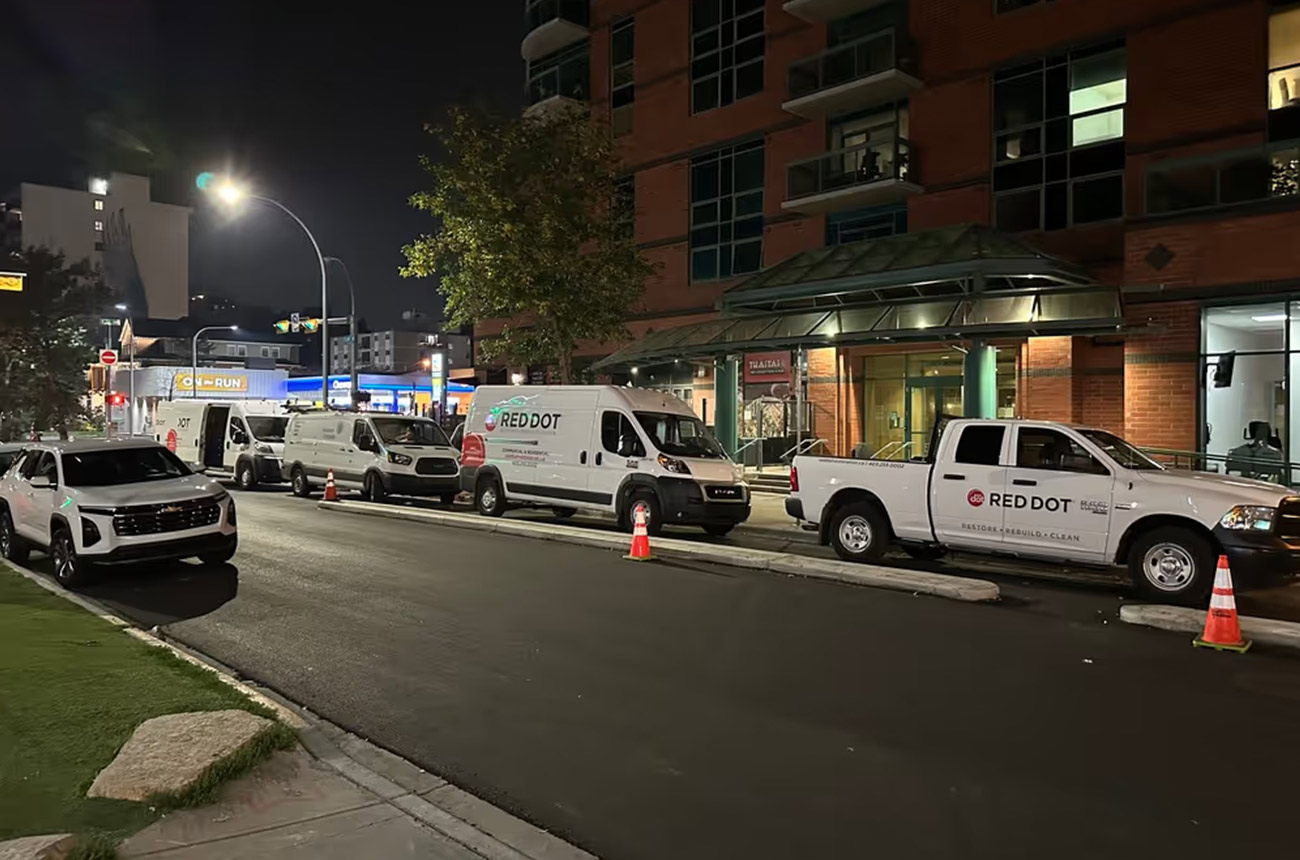
Water damage in a commercial building spreads fast. What starts as a leak in one unit can move through shared walls, ceilings, and flooring before you've had a chance to identify the source. By the time it's visible, the scope is usually larger than expected and the repair costs follow.
In Calgary, the combination of aging infrastructure, shifting seasons, and increased drainage flow makes commercial properties especially vulnerable. Understanding where these situations typically start and having a clear plan when they do are what separate a contained incident from a costly, multi-tenant disruption.
Where Commercial Water Damage Usually Starts
Most water damage in commercial properties comes from a handful of recurring sources.
Sump Pump Failure Sump systems are often the first line of defence in lower-level spaces, but they fail under exactly the conditions they're needed most, like high rainfall, spring snowmelt, or power outages during storms. When a sump pump fails, water can begin to accumulate almost immediately.
Groundwater and Foundation Pressure: As snowmelt and rain saturate the ground around a building, pressure builds against the foundation. Water finds its way in through cracks, joint gaps, or weakened concrete, especially in older Calgary commercial buildings where waterproofing may no longer be adequate.
Plumbing Failures: Leaks, burst pipes, and deteriorating supply lines can release water into walls and ceilings without any visible warning. In commercial properties, the complexity and age of plumbing systems make failures harder to anticipate and escalate more quickly.
Roof and Drainage Issues: Flat roofs are common on commercial buildings in Calgary and require regular maintenance. Blocked drains or deteriorated membranes allow water to pool and eventually penetrate the building envelope. Often showing up as interior ceiling staining long after the entry point has been doing damage.
Why Water Damage Escalates Faster in Commercial Buildings
Shared infrastructure is what makes commercial water damage so unpredictable. Water can move through your buildings HVAC systems, common-area ceilings and connected drainage, affecting multiple tenants at once. Once it reaches drywall, insulation, or flooring, drying becomes a larger process, rather than a quick fix.
For property managers, the downstream impact matters too: tenant disruption, business downtime within the building, potential liability exposure, and the cost of managing multiple affected tenants simultaneously. The longer water sits, the more expensive and complicated the recovery becomes.
Warning Signs to Watch Before It Gets Worse
Catching the problem early is almost always cheaper than dealing with it once it's spread. What you can watch for:
- Musty odours in common areas, stairwells, or mechanical rooms
- Water staining or discolouration on ceilings and walls
- Warping, bubbling, or soft spots in flooring or drywall
- Water pooling near building entry points or in lower levels
- Tenant complaints about moisture, dampness, or unexplained odours
These aren't minor maintenance items; they're indicators that moisture is likely already moving through the building.
How to Reduce Your Risk
You can't prevent every incident, but most water damage situations in commercial buildings are preventable with consistent attention to the right systems.
Scheduled Inspections
Sump pumps, plumbing, and roof drainage should be inspected at least seasonally. Calgary's spring melt and early winter are the highest-risk periods.
Backup Power for Sump Systems
Power outages and storms often happen at the same time. Battery backups or generator connections for sump pumps are a straightforward investment that prevents major losses.
Foundation and Drainage Monitoring
Managing how water moves around the perimeter of your building reduces hydrostatic pressure and lowers the risk of foundation intrusion.
Proactive Maintenance Planning
Reactive maintenance is more expensive and higher risk. A consistent maintenance schedule reduces the chance of unexpected failures and keeps your building code-compliant.
A Clear Emergency Response Plan
Know who to call, who has authority to act, and what the first steps are. In an emergency, hesitation costs money and causes damage.
What to Do When Water Damage Happens
Response time is the single biggest factor in how far water damage spreads and how much it ultimately costs.
Step 1 - Assess Safety First
If water is near electrical panels or elevators, or if there's any sign of contamination (sewage involvement, industrial chemicals), restrict access until the area has been assessed. Don't let tenants or staff enter compromised areas.
Step 2 - Contain What You Can
Close off affected areas to limit foot traffic and cross-contamination. If the source is still active, like a broken pipe or an ongoing roof leak, address that first.
Step 3 - Communicate With Tenants Early
Clear, honest communication early in the process prevents confusion and protects your relationship with tenants. Let them know what happened, what's being done, and what to expect.
Step 4 - Call a Restoration Team Immediately
Surface-level cleanup doesn't address moisture inside walls, subfloors, or ceilings. A professional team brings commercial-grade extraction equipment, moisture detection tools, and the drying protocols needed to prevent mould and structural damage from setting in.
Delays calling in professionals at this stage doesn’t just increase repair costs; it can also create secondary damage claims and prolong tenant displacement.
Why Fast Response Matters for Property Managers
For property managers, how quickly water damage is handled directly affects tenant satisfaction, retention, and your building's long-term condition. A slow or disorganized response compounds an already stressful situation and tenants remember it.
Getting a certified restoration team on-site quickly limits how far the water travels, reduces the amount of material that needs to be replaced, and keeps the scope of work (and the invoice) from growing out of control.
How Red Dot Restoration Supports Commercial Properties
Commercial water damage requires more than a shop vac and a few fans. Red Dot Restoration provides 24/7 emergency response across Calgary and surrounding communities, including Airdrie, Okotoks, Chestermere, Cochrane, High River, and Strathmore, with a team equipped to handle multi-unit and large-scale commercial projects.
Our process covers the full scope: immediate water extraction using commercial-grade equipment, moisture mapping across affected areas, and controlled drying to stop further spread. From there, if you choose, the same team handles repairs and reconstruction, with no handoff to a separate contractor and no delays between phases.
We also support you through the insurance process. From documentation to insurance adjuster coordination, we handle the paperwork so you can focus on your tenants and your building.
When to Call Right Away
Some situations can't wait for a Monday morning callback. Call Red Dot immediately if:
- Water is spreading across multiple units or floors
- Electrical systems are involved
- The water source is unknown or still active
- There are signs of sewage or contamination
- This isn't the first time it's happened
These are signs that the situation goes deeper than what's visible at the surface.
Ready to get ahead of it? Red Dot Restoration is available 24/7 for commercial water-damage emergencies throughout Calgary and the surrounding area. Call us now - we'll have the right team on-site fast.